
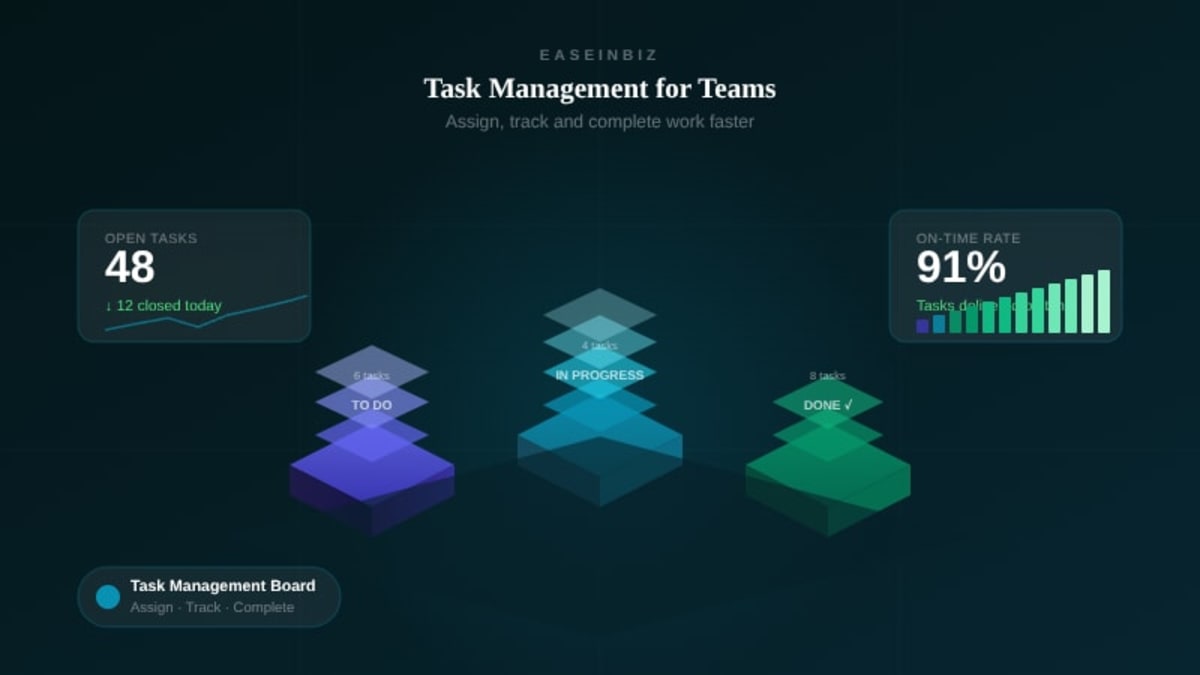
Task Management for Teams: How to Assign, Track, and Complete Work Faster
Think about the last time a task got missed at work. Who found out first — the client, the manager, or the person who was supposed to do it? In most teams without a proper task management system, the answer is usually "the client" — and that's already too late.
Task management isn't just about lists. It's about creating a system where every piece of work has a clear owner, a clear deadline, and a clear path to completion. When done right, it transforms how your team operates — reducing missed deadlines, cutting down on status meetings, and giving managers the visibility they need without micromanaging.
Here's a complete guide to task management for teams in 2025.
What Is Task Management?
Task management is the process of planning, organizing, assigning, tracking, and completing individual units of work across a team or organization. It's the backbone of any project or client delivery workflow.
Effective task management answers four questions at all times:
- What needs to be done? — a clear task description
- Who is doing it? — an assigned team member
- When is it due? — a specific deadline
- What's the current status? — to-do, in progress, or done
When all four questions are answered for every task in your pipeline, you have clarity. Without that clarity, you have chaos.
Why Most Teams Struggle With Task Management
The most common failure mode isn't a lack of effort — it's a lack of system. Teams that rely on:
- Verbal task assignments in meetings
- WhatsApp messages to delegate work
- Email threads with buried action items
- Shared Google Docs with no ownership
...will always hit a wall as the team grows. Human memory is unreliable. Conversations are not trackable. And without a written record, accountability is impossible.
The Key Principles of Effective Team Task Management
1. Every Task Must Have One Owner
Multi-assignee tasks with no primary owner often end up done by nobody. When responsibility is shared equally and informally, everyone assumes someone else will handle it. Assign a primary owner for every task — even if others are supporting.
2. Set Realistic Deadlines (Not Just Aspirational Ones)
Deadlines that everyone knows are impossible destroy morale and normalize slippage. Use historical data or team input to set realistic timelines. If a deadline changes, update it in the system — don't leave stale due dates sitting there.
3. Break Big Work Into Smaller Tasks
A task called "Launch Campaign" is not actionable. Break it down: write copy, design creatives, set up targeting, review and approve, publish. Each of those is a task with an owner and a deadline. Small tasks get done. Vague tasks get deferred.
4. Use Priority Levels Deliberately
Not all tasks are equal. Use priority levels — high, medium, low — to help your team understand where to focus their energy each day. If everything is high priority, nothing is.
5. Make Status Visible to the Whole Team
A task board where everyone can see what's to-do, in progress, and done eliminates the need for daily "what's the status?" check-ins. The board speaks for itself. This is one of the core values of task management software over informal systems.
How to Assign Tasks Effectively
Poor task assignment is one of the most common management errors. Here's how to do it well:
- Assign to the right person, not just the available person. Consider skill set, current workload, and context — not just who has a gap in their schedule.
- Include full context in the task. Don't just write "update the report." Write "Update the Q1 client performance report with the March social media data. Use the previous month's format. Due by EOD Thursday."
- Get confirmation, not just compliance. Ask your team member to confirm they understand the task and the deadline — especially for complex assignments.
- Check in, but don't hover. A mid-point check-in on important tasks is good management. Daily pings on every task is micromanagement.
Task Management vs. Project Management: What's the Difference?
These terms are often used interchangeably, but there's an important distinction:
- Task management focuses on individual units of work — specific, assignable actions.
- Project management focuses on coordinating multiple tasks toward a larger goal — typically with timelines, dependencies, and milestones.
Most small teams and agencies need strong task management first. Once you've got task management dialed in, you can layer in project management complexity as needed.
The ROI of a Good Task Management System
Getting serious about task management delivers measurable returns:
- Fewer missed deadlines — tasks don't fall through the cracks when they're written down, assigned, and tracked
- Less time in meetings — when status is visible, you don't need to call a meeting to find out what's happening
- Faster onboarding — new team members can get up to speed quickly when all work is visible in a shared system
- Better workload balance — managers can see who is overloaded and who has capacity before problems arise
- Stronger client confidence — when you can show a client a clear record of everything being done on their account, trust increases
Choosing the Right Task Management Tool
The best task management tool for your team depends on your workflow. But at a minimum, look for:
- Easy task creation with assignees and due dates
- Status tracking (to-do / in progress / done)
- Multi-assignee support
- Integration with client and project data
- Mobile accessibility for remote and field teams
- Clean, simple interface that your team will actually use
Easeinbiz includes a full task management module that's integrated directly with your client and staff data. Create a task, assign it to a team member, link it to a client account, and track its progress — all without jumping between apps.
Your team is capable of great work. Give them the system to deliver it consistently. Try Easeinbiz and see how task management changes the game.